
Research

Crop Diversification
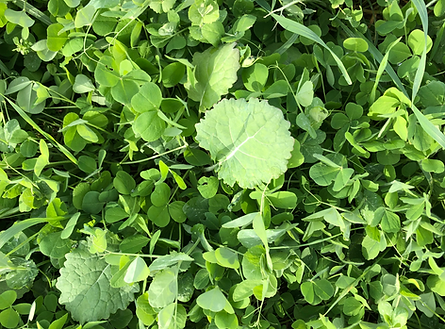
The Cover Crop Cocktail trials vary the seeding rate of three cover crop species from diverse functional groups to study how different proportions of cover crop mixtures impact provisioning of ecosystem services.
This work aims to inform farmers on how to maximize agroecosystem benefits and minimize unnecssary costs and labor.

Extreme Weather
The Northeast US is experiencing a 71% increase in precipitation.
Cover crop surface residue can suppress weeds, so leaf litter serves as alternative weed control when herbicides fail. However, surface residue also increases soil moisture, which may exacerbate herbicide failure following increasingly common extreme rain events.
Therefore, we are investigating how extreme precipitation affects the efficacy of weed management timing.

Ecosystem Services
Plants are ecosystem engineers. Variation in management and local community composition can influence the benefits that farmers and ranchers receive from the plants that they cultivate.
We explore how different weed and cover crop species yield different ecosystem services, to advance the integration of sustainable farming methods with plants that are often regarded as troublesome.
Weed Seedbank Dynamics
Biotic and abiotic factors influence weed seed mortality. Seed and seedling stages are when weeds are most vulnerable. Understanding the conditions that reduce weed seed viability can reduce costs and labor associated with sustainable farming.
We apply Next-Generation Sequencing to explore the microbial communities and abiotic conditions associated with reduced viability of weed seeds in perennial forages and cover crops.

Plant-Rhizosphere
Technological advances have revealed feedback loops between microorganisms and their hosts. We use 16s rRNA and ITS sequencing to characterize the microbial community associated with plants.
By focusing on belowground interactions, we interrogate how plants initiate changes in the microbial community to improve access to otherwise-limited resources like nitrogen and water. We also explore how the microbiome associates with indicators of plant health and seedling survival.

Invasive Plant Ecology
Plants that are introduced from distant environments can sometimes become unmanageable due to competitive advantages associated with a novel ecosystem. Many invasive plants are associated with increased availability of soil nitrogen and benefit from disturbance events like wildfire.
We use both field and greenhouse experiments to interpret how invasive species from different regions associate with differences in their invasive range, to propose novel management techniques.